EUROPEAN UNIVERSITY IN RUSSIA FACES CLOSURE
EUROPEAN UNIVERSITY IN RUSSIA FACES
CLOSURE
With its teaching licence revoked and the forced
removal from its premises, the European University in St Petersburg is on life
support. “We have lost virtually everything,” says one of its professors
For the European
University in St Petersburg, each day is about survival. It has been this
way for some time.
The private and
internationally-backed postgraduate school has been a target of lawmakers for
over a decade, in what critics claim is a complicated plot to stifle
independent points of view, take ownership of a historic building, and stamp
out western influences.
It’s a collection of
different players who have come together to crush it,” says Dmitry Dubrovsky,
associate research fellow at the Centre of Independent Social Research in St
Petersburg, and a former student of the university. “They are doing this with
the aid of the rule of law and the Russian bureaucratic machine.
The university, which has
100 staff and 260 students, has consistently rated among the top institutes in
Russia, and is one of only a few non-state institutes qualified by the Ministry
of Education to award degrees.
But after losing its
teaching licence this year, followed by a forced removal from its premises and
then the departure of its rector, action against the university now seems to
have entered a final stage.
On 5 September, the school
applied for a new licence to operate; if it is not approved before November 1,
the university will not be able to enrol students for the new term.
Having witnessed what he
calls a “political attack” on the university play out for years, professor of
political science, Grigorii Golosov, is pessimistic about his university’s
chances of surviving.
I feel less optimistic than
ever that we can [survive]. We have lost virtually everything we could lose:
our rector, our licence and our building. We are dealing with a tremendous
machine. We’re dealing with something nobody understands,” Golosov said.
The problems began with a series of snap inspections by authorities last
summer.
Officials say the university
has violated up to 120 rules and regulations, such as one which says that
universities of a certain size in Russia must have a gym. The university’s
failure to display anti-alcohol leaflets was another infraction.
It was a notable step up in
pressure, which has been building for the past decade. The university first
found itself in controversy in 2007 when it received a €700,000 grant from the
European Commission for a project to improve election monitoring in Russia.
Soon afterwards the university was shut for six weeks after failing a fire
safety inspection.
Golosov says Russian
president Vladimir Putin was personally involved in shuttering the university.
“This was more or less transparent – not fully transparent though, because
nothing is in contemporary Russia,” he said.
The Russian government did
not respond to repeated requests for comment.
After it reopened, the
university fell into the local government’s crosshairs for offering a class on
gender studies. Vitaly Milonov, an ultra-conservative member of parliament who
rose to prominence after proposing an ‘anti-gay propaganda’ law to
prohibit teaching children about “non-traditional sexual relations",
lodged an official complaint against the university.
I personally find
[gender studies] disgusting, it's fake studies, and it may well be
illegal," Milonov told The Christian Science Monitor.
Despite attempts to rectify
flaws found by officials, the university lost a court battle to hold onto its
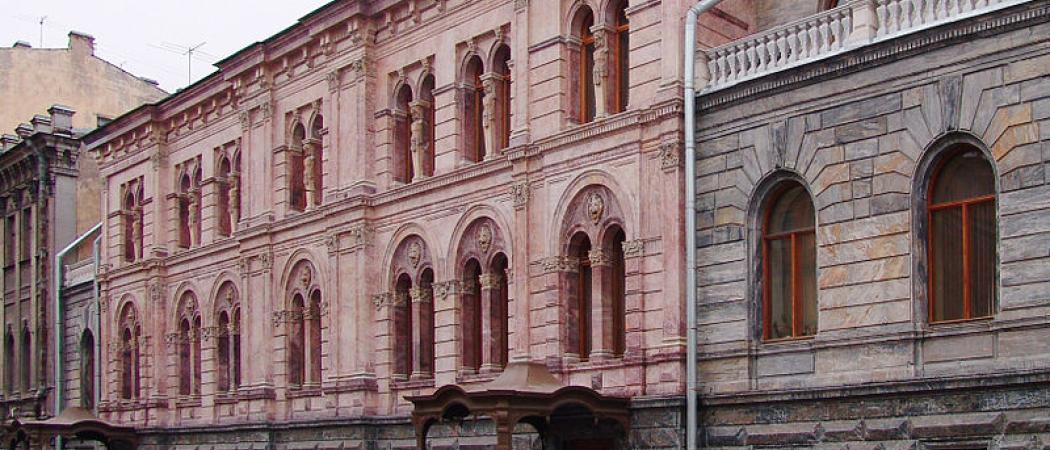
teaching licence. Over the summer, the university also had rights to its home
in the famous Small Marble Palace taken away.
Officials are killing the
university on technicalities, Golosov said. “They are smart people – they
cannot be seen to be closing a university for political purposes. It was too
blatant when we were closed in 2008, and they faced a backlash. Lessons have
been learned.
Since the university’s
failed appeal in the courts, the rector, Oleg Kharkordin, has stepped down and
been replaced by Nikolai Vakhtin.
Kharkordin declined to
comment to Science|Business.
Vakhtin said
bureaucratisation of education in Russia has reached an unprecedented level.
“Universities are losing their academic freedom not because there is
ideological pressure but for the simple reason that literally every lecture and
every seminar is regulated by federal standards. I hope that the ministry
realises this and will stop following this road which, I am convinced, is a
dead-end,” Vakhtin told Science|Business.
Despite the considerable threat hanging over the university, faculty
have found a way to keep going.
We are under psychological
pressure,” said Krom. “I feel trouble and pressure, but I’m trying to move
forward. I just finished a book. I just went to a conference in Helsinki. We
are carrying on with some hope.
Under the forthcoming events
section of the university’s website, is a message that simply reads, “Stay
tuned”.
Even without its teaching
licence, the institute can survive in some form, Krom hopes, perhaps as a scientific
hub that hosts conferences. Since losing its premises, the university has moved
into a new building. “It’s more modest,” said Krom.
As the university staggers
on, Golosov is still searching for some truth, but is not finding it. “A lot of
theories can be proposed as to why we are here, but in the end nobody can prove
them,” he said. “This is Russia: officials can simply say it is because we
didn’t have a gym.


Comments
Post a Comment